 By BitradeX
Most people ask “can you live off crypto interest?” as if the answer were hidden in a reward rate. It is not. The real answer is hidden in the months when the reward falls, the asset drops, a platform changes terms, taxes are due, or withdrawals take longer than expected.
Crypto interest can supplement income for some people with unusually large reserves, low fixed expenses, and a disciplined plan for liquidity. It is a fragile primary paycheck for most users because the income source and the principal are usually exposed to the same market at the same time.
The defensible claim is this: living off crypto interest only makes sense when the user can survive without the interest for a long stretch; if the plan needs the interest to arrive smoothly every month, it is not yet a living-income plan.
The Arithmetic Is Harsher Than the Dream
Start with expenses, not crypto.
The U.S. Bureau of Labor Statistics reported average annual expenditures of $78,535 for all consumer units in 2024. That is not a target for every person. A single renter, a retired couple, or someone living outside the United States may spend far less or far more. But it is a useful anchor because it forces the question away from “how much can crypto pay?” and toward “how much must the household reliably cover?”
Suppose a user needs $48,000 a year before taxes from crypto rewards. At a 4% annual reward rate, that implies $1.2 million of productive principal before fees, taxes, rate changes, and asset drawdowns. At an 8% rate, it implies $600,000 before the same frictions. Those numbers are not recommendations; they show why the math becomes uncomfortable. The rate that makes the plan look easy is often the rate that needs the most explanation.
The mistake is treating the reward rate as if it were the only variable. It is one variable among at least five: principal size, spending needs, tax drag, asset volatility, and interruption risk.
“Interest” Is Often the Wrong Word
Crypto products use familiar income language, but the mechanics are not always familiar.
A staking reward may come from a proof-of-stake network. Validators propose blocks, attest to blocks, and can be penalized for harmful behavior. On Ethereum, a solo validator requires 32 ETH. A validator that signs conflicting messages can be slashed; a validator that is offline can lose smaller inactivity penalties. That is not bank interest. It is compensation tied to network security and operational behavior.
A lending-style product is different. The user may transfer assets to a platform, and the platform may lend, deploy, or otherwise use those assets. The reward depends on borrower demand, platform liquidity, collateral policies, and counterparty performance. If the platform fails, the user’s claim may depend on legal terms rather than a wallet balance.
A liquidity-pool product is different again. The user supplies assets to a market-making pool and may receive fees or incentives. The position can change as prices move, and impermanent loss can make the user worse off than simply holding the assets.
If a household wants to pay rent, groceries, insurance, or medical costs from crypto interest, this distinction is not academic. The source of the reward determines whether the income behaves like protocol compensation, borrower spread, trading-fee income, or a promotional incentive that may disappear.
The Recent Regulatory Signal Is Narrow, Not Comforting
On August 5, 2025, the SEC Division of Corporation Finance published its Statement on Certain Liquid Staking Activities. It described covered liquid staking arrangements and staking receipt tokens, and it said certain activities under the described facts do not involve offers or sales of securities.
That is a recent and important source, but it is not a blanket approval of every crypto income product. The statement is narrow. It does not cover every liquid staking arrangement, does not address restaking, and excludes arrangements where a provider sets or promises reward amounts rather than passing through protocol-determined rewards.
The practical takeaway is conservative: the more a product looks like protocol participation, the more the user should inspect protocol mechanics. The more it looks like a platform promising a payment from its own business activity, the more the user should inspect counterparty, custody, and legal risk.
The First Failure Is Usually Liquidity
A living-income plan fails when cash is needed and the asset cannot be turned into usable money on acceptable terms.
Crypto interest plans often assume that rewards arrive, can be sold, and can be moved to a bank account when bills are due. Each step can break. A protocol may have an exit queue. A platform may change withdrawal rules. A receipt token may trade below the value of the underlying asset. A centralized lender may pause withdrawals. A tax bill may arrive after the asset used to pay the reward has fallen.
Celsius is the historical example because the event made the liquidity issue visible. On June 12, 2022, Celsius paused withdrawals. Customers who had treated an interest account as available liquidity found themselves inside a bankruptcy process instead. That does not mean every crypto interest product has the same structure. It means any plan that depends on uninterrupted withdrawals should be treated as unfinished until the exit path is understood.
For a person trying to live on the income, the question is not “can this product pay?” It is “what happens to my monthly budget if this product stops paying for six months?”
Taxes Make Smooth Income Less Smooth
The IRS digital asset income page, last reviewed or updated on April 1, 2026, lists rewards income from staking or earn programs among digital asset income examples. For U.S. readers, that means crypto rewards can create reporting obligations before the household has converted anything into dollars.
This creates an awkward timing problem. A user may receive a reward, owe tax based on value at receipt, and later see the asset decline. The reward may look like income on a platform screen but behave like a volatile asset on the balance sheet.
A living-income plan should therefore separate three buckets: spending cash, tax reserve, and crypto exposure. If every reward is immediately needed for bills, there may be no room for tax volatility, network delays, platform delays, or price movement. That is not a crypto problem alone. It is a household-liquidity problem.
A More Realistic Test
The clean version of a crypto-interest plan has four requirements.
First, essential expenses are covered for months without crypto rewards. This buffer is what prevents a delayed withdrawal from becoming a forced sale.
Second, the reward source is explainable in one paragraph. If the user cannot explain whether the reward comes from staking, lending, liquidity provision, or a managed strategy, the income is not stable enough to build a budget around.
Third, the exit path is written down before the product is used. A claim of flexible access is not enough. The plan should describe how long withdrawals may take, what can pause them, and what price risk exists during the exit.
Fourth, the user tracks records as if the tax authority will ask for them. Dates, values, reward types, fees, disposals, and transfers all matter.
Passing that test does not make the plan safe. It simply means the user is analyzing the plan as income rather than as a hopeful reward stream.
Market Context Comes Before Income Claims
No platform should be treated as a product that lets users live off crypto interest. The more credible workflow is upstream: review market conditions, organize research, and understand how volatile assets behave before relying on any reward product.
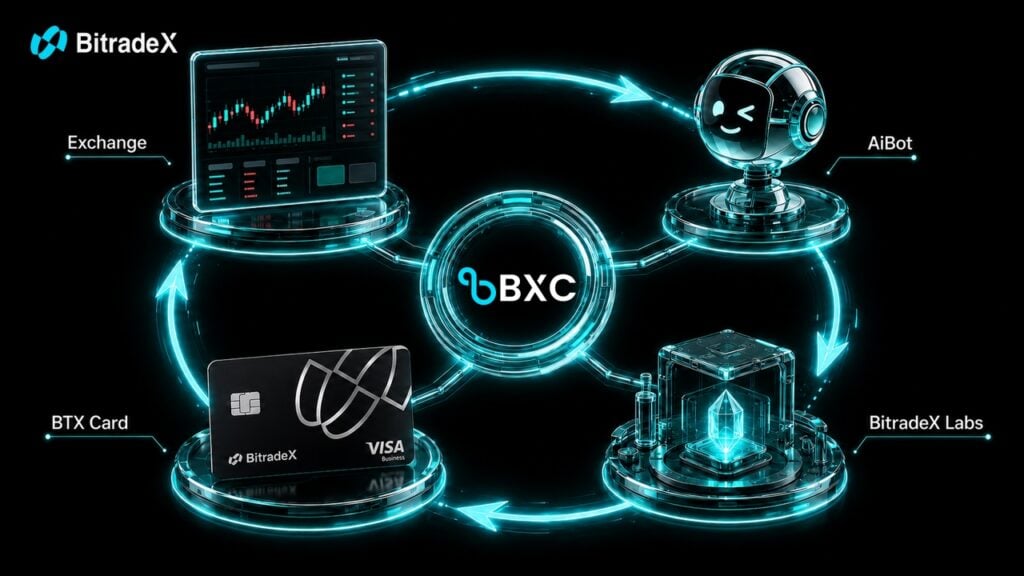
For example, someone building a living-income scenario can use a crypto market overview to watch asset movement and stress-test whether a reward rate is being overwhelmed by price volatility.
A user who wants a more structured research workflow can register through an AI-assisted crypto trading environment while keeping the income decision separate from platform access. AI tools and trading interfaces do not remove market risk, and past performance does not determine future results.
The Practical Answer
Can you live off crypto interest?
In theory, yes, if the principal is large, expenses are modest, taxes are planned, withdrawals are dependable, and the household can survive long periods without rewards. In practice, most users should treat crypto interest as uncertain supplemental income, not as a replacement paycheck.
The line between the two is not confidence. It is redundancy. If the plan still works when rewards fall, withdrawals slow, asset prices decline, and tax cash is set aside, then crypto interest may be one part of a broader income system. If the plan fails as soon as the reward stream gets messy, it is not income independence. It is exposure with a due date.
FAQ
Can you live off crypto interest?
It is possible in theory, but only with substantial reserves, controlled expenses, tax planning, and the ability to survive periods when rewards decline or withdrawals are delayed. For most users, crypto interest is better treated as uncertain supplemental income.
How much crypto would you need to live off interest?
It depends on spending and the reward rate. For example, $48,000 of annual spending would require $1.2 million at a 4% annual reward rate before fees, taxes, and volatility. Higher rates reduce the headline principal requirement but usually require closer risk analysis.
Is crypto interest reliable monthly income?
Not reliably. Rewards can change, asset prices can fall, platforms can alter terms, withdrawals can slow, and taxes may be due even when the asset later declines.
Is staking safer than crypto lending for income?
Staking and lending have different risks. Staking depends on protocol mechanics, validator performance, slashing rules, and asset volatility. Lending depends more heavily on custody, borrower repayment, platform liquidity, and legal terms.
How can BitradeX help with this decision?
BitradeX can support market review and AI-assisted research workflows before users evaluate crypto income products. It should not be treated as an income promise or as a substitute for personal financial, tax, or legal advice.
Disclaimer
Digital asset prices can be volatile. This article is for informational purposes only and should not be treated as investment, legal, tax, or financial advice. Users are responsible for their own trading decisions and should evaluate whether any product or transaction is appropriate for their circumstances.