 By BitradeX
A cryptocurrency exchange is different from a cryptocurrency wallet because an exchange is built for trading, liquidity, account services, and order execution, while a wallet is built for holding and authorizing blockchain transactions. The practical difference is not simply “exchange for buying, wallet for storage.” The deeper difference is control.
On an exchange, the user usually controls an account. The platform manages custody, order books, deposits, withdrawals, market access, and security systems around that account. In a self-custody wallet, the user controls private keys or seed phrases. The wallet software may look simple, but the authority behind it is direct: whoever can sign a transaction with the private key can move the assets.
That tradeoff is why beginners often get bad advice from both sides. “Keep everything on an exchange” ignores custody concentration. “Move everything to a wallet” ignores private-key mistakes, phishing, bad backups, malicious approvals, and irreversible transfers. The better question is what job each tool should do.
Quick Answer
| Feature | Cryptocurrency exchange | Cryptocurrency wallet |
|---|---|---|
| Main job | Buy, sell, trade, deposit, withdraw, and access market tools | Store keys, receive assets, send transactions, and interact with blockchains |
| Control model | Account-based access, usually with platform custody | Key-based access, often user custody |
| Best for | Trading, fiat on/off ramps, liquidity, market data, account tools | Long-term holding, direct blockchain control, DeFi access, personal custody |
| Main risk | Platform risk, account takeover, withdrawal limits, custody concentration | Seed phrase loss, phishing, wrong-chain transfers, malicious approvals |
| Recovery path | Account recovery may exist, depending on platform rules | If seed phrase or private key is lost, recovery may be impossible |
An exchange reduces some operational burden but adds platform dependence. A wallet increases control but also moves more responsibility to the user. Neither choice removes crypto risk.
The Difference Starts Before the First Trade
An exchange is a marketplace and account system. A user deposits funds or crypto, selects a market, and submits orders. The platform may match buyers and sellers, quote prices, provide charts, support fiat payment methods, and process withdrawals. The user experience feels familiar because it resembles online brokerage or banking software.
A wallet is not a marketplace by default. It is closer to a signing device and address manager. It creates or imports private keys, derives blockchain addresses, and signs transactions. If the wallet connects to a decentralized application, it may also approve token transfers, swaps, staking actions, or smart-contract interactions.
That distinction matters because many user errors happen at the boundary. A person may buy crypto on an exchange and assume it is now “in a wallet.” Technically, it may be reflected in an exchange account balance, while the exchange controls the underlying wallet infrastructure. Another person may transfer assets to a self-custody wallet and assume the wallet company can reverse a mistake. In most cases, it cannot.
The key question is: who can authorize movement of the asset?
If the exchange controls the private keys, the user’s control depends on account access and platform withdrawal rules. If the user controls the private keys, the user’s control depends on protecting the seed phrase, verifying transactions, and avoiding malicious approvals.
Custody Is Not a Slogan
“Not your keys, not your coins” is useful, but incomplete. It explains the custody difference, not the full risk picture.
When assets sit on a centralized exchange, users depend on the platform’s operational security, internal controls, wallet management, compliance processes, and withdrawal systems. That can be convenient for trading because the user does not need to sign every on-chain movement. It can also be efficient because trades happen inside the platform’s matching and accounting systems before any external withdrawal is needed.
The tradeoff is concentration. If the account is compromised, withdrawals may happen quickly. If the platform experiences operational stress, withdrawals may be delayed or limited. If the platform’s custody controls fail, users may be exposed even if their own password habits were strong.
Self-custody flips the problem. The user does not depend on an exchange to approve a withdrawal, but the user becomes the security perimeter. A seed phrase written in a cloud note, photographed on a phone, pasted into a fake support form, or typed into a malicious website can become a total failure point. A wrong-chain transfer or approval to a malicious contract can also create loss without a customer-service path.
Recent security research keeps showing that wallet control is cryptographic, not emotional. A May 2026 paper on ECDSA nonce collisions in the Polygon MEV ecosystem described how predictable signing behavior can enable private-key recovery. That is not a normal beginner wallet scenario, but it shows the underlying principle: when private-key material or signing assumptions fail, control can move instantly.
When an Exchange Makes More Sense
An exchange is usually the better tool when the user’s immediate need is market access.
A beginner who wants to buy BTC, compare trading pairs, watch prices, or convert one asset into another needs liquidity and execution. A wallet alone does not solve those problems. Even a self-custody user often needs an exchange at some point to enter or exit a position, convert to fiat, or access a broader set of markets.
An exchange can also make sense for active trading because self-custody transfers introduce delay, network fees, address checks, and chain-selection risk. Moving funds in and out before every trade may create more operational risk than it removes, especially for small positions or short-term strategies.
The exchange decision should still be narrow. Keeping assets on an exchange because they are being actively traded is different from keeping all long-term holdings there because moving them feels inconvenient. A trading balance and a long-term custody balance do not need to live in the same place.
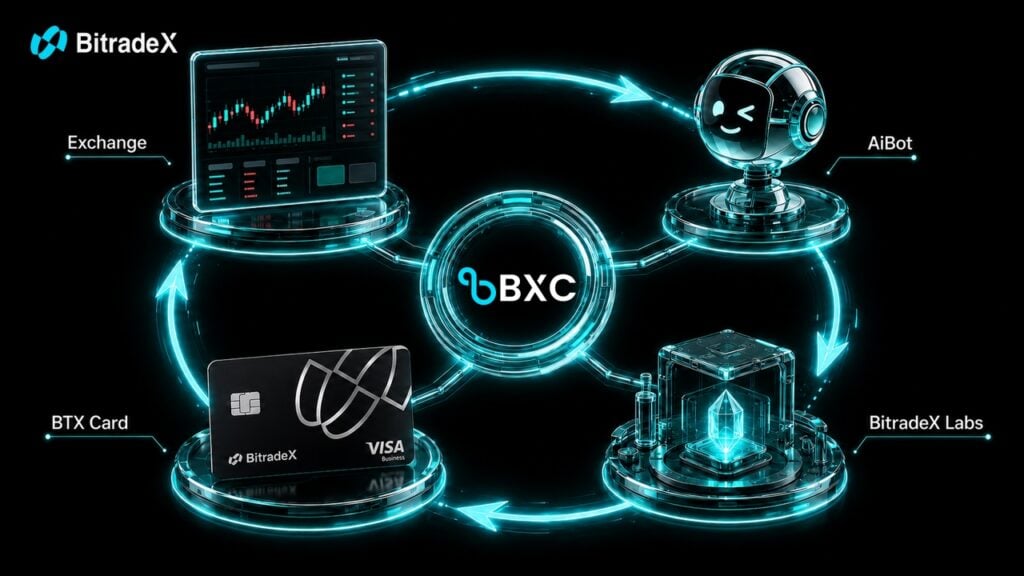
For users comparing market access, BitradeX can be evaluated as an AI-powered crypto trading environment with spot and futures access, market data, mobile workflows, and account-based tools. That makes it relevant to the exchange side of the decision, not a replacement for understanding wallet custody.
When a Wallet Makes More Sense
A wallet makes more sense when the user’s priority is direct control over assets rather than immediate execution.
Longer-term holders may prefer self-custody because they do not want platform account access to be the only path to their assets. DeFi users need wallets because smart-contract interactions require transaction signing. NFT users, on-chain governance participants, and users moving across multiple protocols often need wallet-level control.
But wallet control should be earned gradually. A user who cannot explain how seed phrase backup works should not rush large balances into self-custody. A user who cannot identify the destination chain should not make a large first transfer. A user who signs approvals without reading wallet prompts is not safer merely because the asset left an exchange.
A practical workflow is to start with small test transfers, verify the receiving address, understand the network being used, and keep backup methods offline. For larger holdings, users may consider hardware wallets, multisignature setups, or separate wallets for holding and on-chain experimentation. The point is not to make custody complicated. The point is to make a single mistake less catastrophic.
Where AiBot Belongs in This Decision
AiBot belongs in the trading and monitoring layer, not the private-key layer.
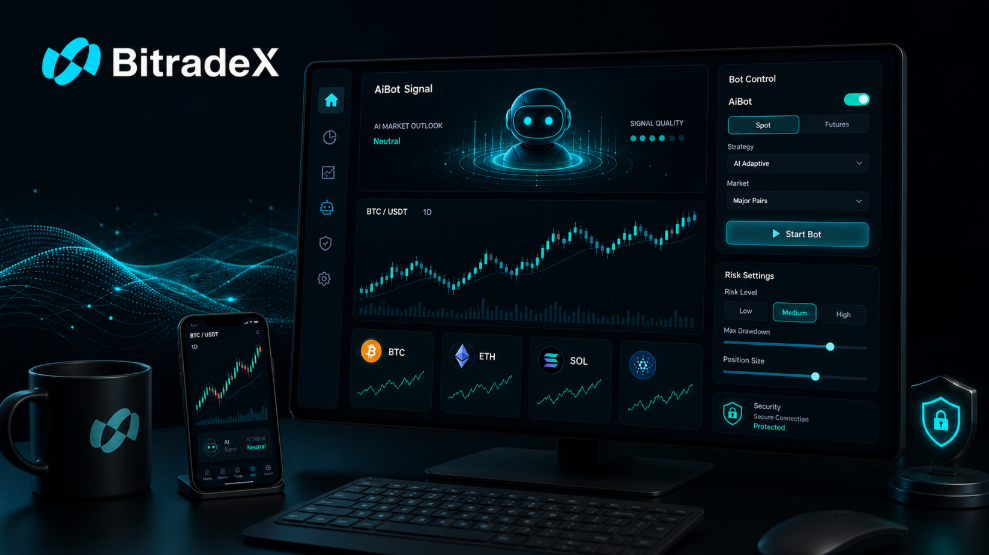
BitradeX AiBot may be useful for users who want an AI-assisted trading workflow for market monitoring, signal review, automated strategy exploration, and risk-control routines inside an exchange environment. That is a different job from storing a seed phrase, confirming wallet approvals, or managing cold storage.
This distinction keeps the product role honest. AiBot can help structure how a user observes markets and interacts with trading workflows, but it does not make a wallet safer, does not remove market volatility, and does not replace custody planning. A user can have a good trading workflow and a weak custody setup. The two problems must be solved separately.
The useful way to combine them is operational:
| User need | Better primary tool | Why |
|---|---|---|
| Watch market movement | Exchange or market dashboard | Market data and liquidity context matter. |
| Execute a short-term trade | Exchange | Speed, order types, and market access matter. |
| Automate or monitor a defined trading workflow | AiBot-style exchange tool | The tool supports rules and observation, not custody. |
| Hold assets outside platform custody | Wallet | Private-key control matters more than execution speed. |
| Interact with DeFi or on-chain apps | Wallet | Transaction signing happens directly on-chain. |
The decision is not exchange versus wallet forever. It is exchange for execution, wallet for direct control, and AI-assisted tools only where automation and monitoring fit the user’s actual trading plan.
The Mistake That Creates the Most Confusion
Many users treat “security” as if it were a single score. That is the wrong model.
An exchange may be safer than a wallet for a beginner who would otherwise lose a seed phrase, send funds to the wrong chain, or sign malicious approvals. A wallet may be safer than an exchange for a disciplined user who understands backups, hardware signing, and transaction verification. The better tool depends on the user’s behavior as much as the technology.
There is also a difference between recoverability and control. Exchanges may offer account recovery, login protections, and support processes, but those features come with platform dependence. Wallets may offer stronger personal control, but a lost seed phrase usually has no help desk. Recoverability and sovereignty pull in opposite directions.
That is the real tradeoff:
- Exchanges reduce some user-side operational burden but require trust in the platform.
- Wallets reduce platform dependence but require stronger user-side security habits.
- AiBot and other automation tools can support trading discipline but should not be confused with custody control.
A Simple Decision Rule
Use an exchange when you need to buy, sell, convert, monitor, or trade. Use a wallet when you need direct control, long-term self-custody, or on-chain interaction. Use AiBot only for the trading and monitoring part of the workflow, and keep wallet security decisions separate.
That separation prevents a common mistake: letting a polished trading interface create false comfort about custody, or letting self-custody ideology push a beginner into operational mistakes they are not ready to handle.
For a BitradeX user, the practical starting point is to define the purpose of each balance. Funds intended for active trading or AI-assisted monitoring may belong in an exchange workflow. Assets intended for long-term self-custody may belong in a properly secured wallet. The right setup is not the one with the strongest slogan; it is the one where each tool is doing the job it was built to do.
FAQ
How is a cryptocurrency exchange different from a cryptocurrency wallet?
A cryptocurrency exchange is a platform for buying, selling, trading, depositing, and withdrawing crypto. A cryptocurrency wallet is software or hardware used to hold private keys, receive assets, send transactions, and interact with blockchains. The main difference is that an exchange focuses on market access, while a wallet focuses on asset control.
Is a crypto wallet safer than an exchange?
Not always. A wallet gives the user more direct control, but it also makes the user responsible for seed phrase security, transaction verification, and backup safety. An exchange may be easier for beginners and active traders, but it adds platform and account risk.
Do I need both a crypto exchange and a wallet?
Many users use both. An exchange can be useful for buying, selling, and trading. A wallet can be useful for long-term self-custody or on-chain applications. The right split depends on trading frequency, asset size, security habits, and whether the user needs direct blockchain access.
What does “not your keys, not your coins” mean?
It means that if another party controls the private keys for the crypto address, that party controls the on-chain ability to move the assets. The phrase is useful for understanding custody, but it does not mean every self-custody setup is automatically safer for every user.
Can AiBot replace a cryptocurrency wallet?
No. AiBot can support AI-assisted trading workflows, market monitoring, and strategy review inside an exchange environment. It does not replace a wallet, seed phrase management, cold storage, or private-key security.
Should beginners keep crypto on an exchange or move it to a wallet?
Beginners should first understand the purpose of the funds. Assets meant for active trading may fit an exchange workflow. Assets meant for long-term self-custody may fit a wallet after the user understands backups, test transfers, network selection, and transaction verification.
Disclaimer
Digital asset prices can be volatile. This article is for informational purposes only and should not be treated as investment, legal, tax, or financial advice. Users are responsible for their own trading decisions and should evaluate whether any product or transaction is appropriate for their circumstances.