 By BitradeX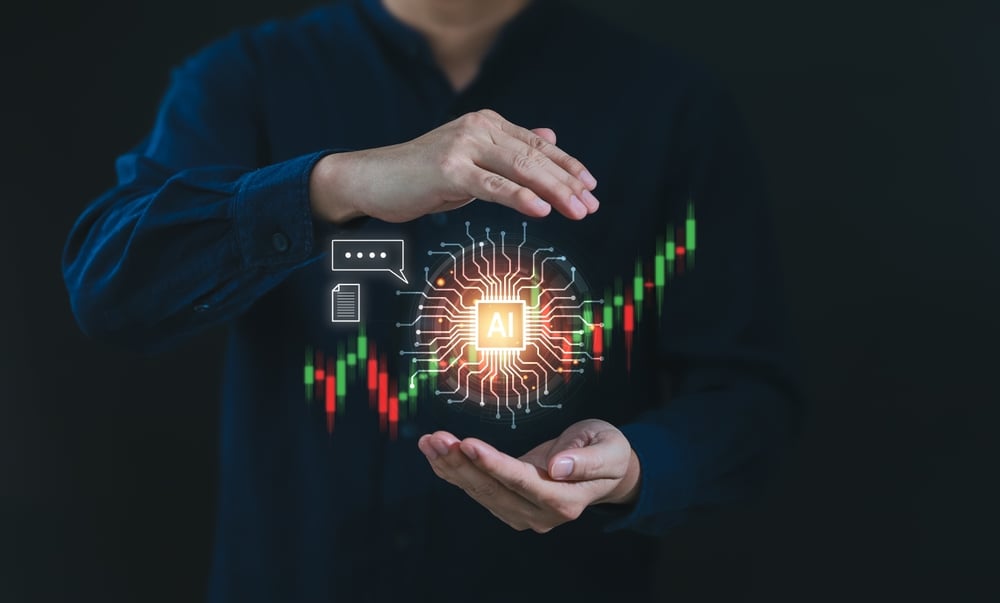
Crypto investing has changed. A few years ago, most retail investors manually checked charts, read news, followed social media sentiment, and placed trades themselves. Today, AI tools can scan market data, summarize narratives, detect patterns, automate strategies, and even suggest portfolio adjustments.
That does not mean manual investing is obsolete.
The better question is not “AI or human?” It is: which parts of crypto investing should be automated, and which parts still need human judgment?
AI crypto investing can help with speed, discipline, and data processing. Manual investing can help with context, common sense, long-term conviction, and avoiding blind trust in models. The strongest approach for most investors is not a full handoff to AI. It is a hybrid system where AI supports research and execution, while the investor keeps control over strategy, risk, and final decisions.
This guide compares AI crypto investing vs manual investing in practical terms: what each does well, where each fails, and how to combine both without falling into hype.
What Is AI Crypto Investing?
AI crypto investing uses artificial intelligence, machine learning, automation, or data-driven models to support investment decisions in digital assets. Depending on the tool, AI may help with:
- Market scanning
- Price and volume pattern detection
- Portfolio analysis
- Risk alerts
- Sentiment analysis
- Strategy automation
- Trade execution
- Rebalancing
- On-chain data interpretation
- News and social trend summarization
Some AI tools are simple assistants that summarize information. Others are closer to automated trading systems that generate buy and sell signals. More advanced systems may combine market data, wallet activity, sentiment, and technical indicators into portfolio-aware suggestions.
Recent AI crypto products are moving toward agent-style workflows, where users can ask a tool to analyze holdings, explain trade ideas, or eventually act within predefined trading rules. For example, Nansen’s AI chatbot was reported to use blockchain data across more than two dozen public chains, with future testing around trading agents, while also warning users to verify chatbot outputs because they can hallucinate.
That warning matters. In crypto, a confident AI answer is not the same as a correct investment decision.
For investors who want AI-assisted tools rather than fully manual workflows, platforms such as BitradeX position their product around an AI crypto trading platform experience, while still leaving the user responsible for strategy, risk, and execution choices.
What Is Manual Crypto Investing?
Manual crypto investing means the investor makes decisions directly. The investor researches assets, evaluates market conditions, chooses entry and exit levels, manages risk, and places orders without relying on an automated model to make the decision.
Manual investing can include:
- Reading project whitepapers and tokenomics
- Studying macroeconomic conditions
- Reviewing Bitcoin cycles and liquidity trends
- Tracking regulatory news
- Checking exchange liquidity
- Using charts and indicators
- Following developer activity
- Assessing narratives and market psychology
- Deciding position size manually
Manual investing does not mean “no tools.” A manual investor may still use charts, screeners, exchange data, and alerts. The difference is that the final investment decision comes from the investor, not an AI system.
This approach can be slower, but it gives the investor more control. In crypto, where new narratives can move quickly and bad data can spread fast, human judgment still has value.
AI Crypto Investing vs Manual Investing: Quick Comparison
| Factor | AI crypto investing | Manual investing |
|---|---|---|
| Speed | Very fast; can scan and react continuously | Slower; depends on investor availability |
| Data processing | Strong at handling large data sets | Limited by time and attention |
| Emotional control | Can reduce panic and impulsive trading if rules are clear | Vulnerable to fear, greed, and FOMO |
| Strategy design | Depends on model quality and user configuration | Depends on investor skill and discipline |
| Adaptability | Good when trained or configured for the right regime; weak when conditions change unexpectedly | Stronger for interpreting unusual events |
| Transparency | Varies; some models are black boxes | Higher if the investor documents their process |
| Risk management | Can automate stops, alerts, and rebalancing | More flexible but easier to ignore |
| Best use case | Data scanning, signal support, execution discipline, portfolio monitoring | Thesis building, judgment, asset selection, risk boundaries |
| Main risk | Overtrusting outputs, bad data, overfitting, hidden assumptions | Emotional decisions, slow reaction, inconsistent process |
The real winner depends on the investor’s goal. For short-term execution, AI and automation can be useful. For long-term crypto investing, manual judgment remains important because narratives, regulation, liquidity, token design, and market trust cannot be reduced to a single signal.
Where AI Crypto Investing Has an Edge
AI can process more market information than a human
Crypto trades 24/7. Bitcoin can move sharply while a manual investor is asleep. Altcoins can react to social posts, exchange listings, liquidity changes, unlock schedules, bridge exploits, or macro news in minutes.
AI systems can help monitor:
- Price changes
- Volume spikes
- Funding rates
- Volatility
- On-chain flows
- Wallet activity
- News sentiment
- Social attention
- Correlations between assets
A human investor can check some of this manually. AI can check it continuously.
This is especially useful for investors who follow multiple assets. Instead of manually opening dozens of charts, an AI-assisted workflow can surface unusual activity and let the investor decide whether it matters.
AI can reduce emotional trading
Manual investors often know what they should do but fail to do it. They buy too late because the price is rising. They sell too early because they feel nervous. They ignore stop losses. They increase risk after a lucky trade.
AI tools can help enforce predefined rules. For example:
- Alert when an asset breaks a risk threshold
- Reduce position size when volatility rises
- Execute a recurring strategy on schedule
- Flag portfolio concentration
- Prevent impulse entries outside a plan
This does not make AI “smarter” than humans. It makes AI more consistent at following instructions.
AI can improve execution discipline
A well-configured AI or automated trading system may be useful for execution-heavy strategies. These include:
- Dollar-cost averaging
- Grid strategies
- Rebalancing
- Volatility-based alerts
- Technical breakout monitoring
- Mean-reversion strategies
- Pair-trading research
Research on reinforcement learning for crypto pair trading found that specific RL-based approaches outperformed a traditional non-RL pair-trading method in the tested BTC-GBP and BTC-EUR datasets, though results varied by model and setup.
That does not prove every AI crypto strategy works. It does show that AI can be useful when the problem is specific, measurable, and tested under defined conditions.
For investors who want to explore automation carefully, an AI trading bot can be understood as a tool for executing or assisting a strategy—not as a replacement for risk management.
AI can help beginners structure research
Beginners often struggle because crypto information is fragmented. They may bounce between charts, X posts, Telegram groups, token pages, exchange data, and news headlines.
AI can help turn scattered information into a clearer checklist:
- What is the asset?
- What problem does it claim to solve?
- What is the market cap?
- What are the unlock risks?
- Is liquidity deep enough?
- What narrative is driving demand?
- What could invalidate the thesis?
- What is the downside scenario?
That structure can help beginners avoid random decisions. But the user still needs to verify the answer.
Where Manual Investing Still Wins
Humans are better at interpreting unclear context
AI can identify patterns, but crypto often moves because of context that is hard to model. Examples include:
- Regulatory pressure
- Exchange solvency fears
- Founder credibility
- Community trust
- Token unlock expectations
- Narrative exhaustion
- Macro liquidity shifts
- Market manipulation concerns
- Sudden changes in risk appetite
A model may detect that an asset is trending. A human may ask whether the trend is sustainable, overhyped, or driven by low-quality speculation.
This is why manual judgment is still valuable. Crypto investing is not only about detecting movement. It is about understanding whether the movement is worth trusting.
Manual investors can avoid black-box dependence
Some AI tools do not clearly explain how they generate signals. They may rely on backtests, indicators, sentiment inputs, or proprietary scoring systems that users cannot inspect.
This creates a problem: if the investor does not understand why a tool recommends an action, they may not know when to ignore it.
The SEC has already warned against “AI washing,” charging two investment advisers in 2024 for false and misleading statements about their use of AI. The firms agreed to pay $400,000 in total civil penalties.
That case was not about crypto specifically, but the lesson applies directly: investors should be careful when a platform uses “AI” as a trust signal without explaining what the technology actually does.
Humans can set values and boundaries
AI can optimize for a target, but the investor must choose the target.
For example:
- Maximum acceptable drawdown
- Long-term vs short-term horizon
- Spot-only vs leverage
- Bitcoin-heavy vs altcoin-heavy allocation
- Income, growth, or speculation
- Ethical or regulatory boundaries
- Maximum exposure to illiquid tokens
AI can assist once these rules exist. It should not define them alone.
Manual investing can be better for long-term conviction
Long-term crypto investing often requires patience through volatility. An investor who understands their thesis may be less likely to panic during drawdowns.
A purely AI-driven investor may struggle when the model changes signals frequently. A manual investor with a strong thesis can separate normal volatility from genuine thesis failure.
For example, someone using real-time crypto market data may see short-term noise, but manual judgment helps decide whether that noise changes the long-term view.
The Biggest Myth: AI Removes Risk
AI does not remove crypto risk. It changes the type of risk.
Manual investors face emotional and informational risk. AI-assisted investors face model, data, automation, and overtrust risk.
Important AI-related risks include:
- Bad input data
- Overfitted backtests
- Hallucinated explanations
- False confidence
- Strategy decay
- Poor liquidity assumptions
- Exchange execution issues
- Smart contract or API risk
- Excessive leverage
- Misleading marketing claims
Academic research has also warned that some reported AI trading performance can be misleading. One paper found that simple non-AI strategies could outperform certain public-domain AI/ML trading agents under broader testing, suggesting that some AI trading claims may answer the wrong question or rely on weak evaluation methods.
The takeaway is not “AI does not work.” The takeaway is: AI must be tested, constrained, and monitored.
AI Crypto Investing Works Best for These Use Cases
AI can be useful when the task is repetitive, data-heavy, or rule-based.
1. Market monitoring
AI can watch many assets and alert users when something unusual happens. This is helpful for investors who do not want to stare at charts all day.
2. Portfolio review
AI can help summarize exposure. For example, it may identify that a portfolio is too concentrated in one ecosystem, too exposed to high-beta altcoins, or too correlated with Bitcoin.
3. Strategy backtesting
AI tools can help test ideas, but backtests should be treated carefully. A strategy that performed well in one market regime may fail in another.
4. Automated execution
Automation can help with strategies that require consistency, such as recurring buys, rebalancing, or predefined entry and exit rules.
5. Signal filtering
AI can help filter noise by prioritizing alerts or ranking assets for further manual review. The investor still decides what to act on.
Manual Investing Works Best for These Use Cases
Manual investing is strongest when the task requires judgment, skepticism, or long-term context.
1. Choosing a thesis
AI can summarize a thesis, but the investor should decide whether it is convincing.
2. Evaluating project quality
Tokenomics, governance, team credibility, ecosystem strength, and product-market fit require more than a price chart.
3. Managing unusual events
When unexpected news hits, manual review is often better than blindly following a signal.
4. Avoiding scams and hype
Crypto scams often use urgency, fake authority, and promises of easy returns. The FTC warns that scammers may guarantee profits, promise big returns, or demand crypto payments; those are red flags investors should treat seriously.
5. Deciding when not to trade
One of the most underrated manual investing skills is doing nothing. AI may constantly surface opportunities, but not every signal deserves capital.
The Best Approach: Hybrid AI + Manual Investing
For most crypto investors, the strongest workflow is hybrid.
Use AI for speed. Use human judgment for meaning.
A practical hybrid process might look like this:
| Step | AI role | Human role |
|---|---|---|
| Market scan | Surface unusual movements, trending assets, and risk alerts | Decide whether the signal is meaningful |
| Research summary | Summarize project basics, tokenomics, and recent news | Verify sources and judge credibility |
| Portfolio review | Flag concentration, volatility, and correlation | Choose risk limits and allocation |
| Trade planning | Suggest scenarios and levels | Approve or reject the plan |
| Execution | Automate orders within strict rules | Monitor performance and adjust rules |
| Post-trade review | Summarize outcomes and errors | Improve the strategy |
This workflow keeps AI useful without giving it unchecked authority.
For example, an investor might manually decide they want Bitcoin exposure, then use tools to compare spot prices, monitor volatility, or execute a planned entry. A page such as BTC/USDT spot trading can fit naturally into the execution step, while the investment thesis remains manual.
For more advanced investors, futures can be part of a risk-managed strategy, but leverage should be treated carefully. A page for BTC USDT futures trading is relevant only after the investor understands liquidation risk, margin, volatility, and position sizing.
How to Choose Between AI and Manual Investing
The right choice depends on your experience, time, and risk tolerance.
Choose more AI assistance if:
- You monitor many assets
- You struggle with consistency
- You want alerts and summaries
- You use rule-based strategies
- You need help organizing research
- You can verify outputs before acting
- You understand that AI is not a guarantee
Choose more manual control if:
- You are building long-term positions
- You invest based on fundamentals
- You do not understand the AI model
- You are dealing with illiquid assets
- You are unsure about risk settings
- You are tempted to overtrade
- You cannot afford large drawdowns
Use both if:
- You want better research speed without losing control
- You want automation for execution but manual approval for decisions
- You want AI alerts but human risk management
- You want to reduce emotional trading while keeping strategic judgment
That final category is where most serious investors belong.
Questions to Ask Before Trusting an AI Crypto Tool
Before using any AI crypto investing tool, ask:
- What data does it use?
- Is the signal explainable?
- Does it show historical performance honestly?
- Are fees, spreads, and slippage included in performance claims?
- Does it work in both bull and bear markets?
- Can I set strict risk limits?
- Can I stop or override the tool?
- Does it make unrealistic return claims?
- Does it require custody of my assets?
- Does it encourage leverage without explaining downside?
If a tool cannot answer these questions clearly, treat it as a research aid at most.
Common Mistakes in AI Crypto Investing
Mistake 1: Treating AI as a profit machine
AI can support decisions. It cannot remove uncertainty. Any tool promising guaranteed profits should raise concern.
Mistake 2: Ignoring market regime changes
A strategy that works in a trending bull market may fail in a sideways or bearish market.
Mistake 3: Overusing leverage
AI signals can feel precise, but crypto volatility can still move against a position quickly. Precision in a model does not eliminate liquidation risk.
Mistake 4: Confusing backtests with reality
Backtests can be useful, but they may ignore liquidity, slippage, fees, latency, and changing market behavior.
Mistake 5: Not documenting decisions
Whether investing manually or with AI, investors should record why they entered, what would invalidate the trade, and how much they are willing to lose.
So, Which Wins?
AI crypto investing wins on speed, consistency, monitoring, and data processing.
Manual investing wins on context, judgment, skepticism, and long-term thesis building.
The best answer is not one or the other. It is a controlled combination:
- Let AI scan, summarize, alert, and automate rules.
- Let humans define strategy, risk, position size, and final approval.
- Let performance data—not marketing language—decide whether a tool deserves more trust.
In crypto, the market moves too fast for purely manual workflows to be ideal for everyone. But it is also too uncertain, narrative-driven, and risk-heavy for blind automation.
The smartest investors will not ask AI to replace them. They will use AI to become more disciplined, better informed, and less reactive.
FAQ
Is AI crypto investing better than manual investing?
AI crypto investing is better for speed, market monitoring, data analysis, and rule-based execution. Manual investing is better for context, long-term judgment, risk boundaries, and interpreting unusual events. Most investors benefit from combining both.
Can AI predict crypto prices accurately?
AI can identify patterns and probabilities, but it cannot predict crypto prices with certainty. Crypto markets are affected by liquidity, sentiment, regulation, macro conditions, exchange events, and unexpected news.
Are AI crypto trading bots safe?
AI crypto trading bots can be useful when they are transparent, configurable, and risk-controlled. They become risky when users overtrust them, use leverage carelessly, or rely on tools that make unrealistic profit claims.
Should beginners use AI for crypto investing?
Beginners can use AI to organize research, explain market concepts, and monitor portfolios. They should avoid giving AI full trading control until they understand risk management, fees, volatility, and how the tool makes decisions.
What is the best strategy: AI or manual investing?
The best strategy is usually hybrid. Use AI for research support, alerts, and disciplined execution. Use manual judgment for thesis development, risk limits, position sizing, and final decisions.
Disclaimer
Digital asset prices can be volatile. This article is for informational purposes only and should not be treated as investment, legal, tax, or financial advice. Users are responsible for their own trading decisions and should evaluate whether any product or transaction is appropriate for their circumstances.