 By BitradeX
Is crypto interest worth it? The honest answer is: sometimes, for some users, in limited situations, but only after the risks are clear. Crypto interest can come from staking, lending, liquidity provision, rewards programs, or platform incentives. The label sounds familiar, but it is not the same as a bank savings account.
That distinction matters. With a bank account, interest is usually tied to a regulated deposit relationship and may include deposit insurance when held at an eligible institution. With crypto interest, the user may be exposed to price volatility, custody risk, platform failure, smart contract risk, withdrawal limits, tax reporting, and changing product terms.
This article explains how to decide whether crypto interest is worth considering, what risks to compare, and how BitradeX can support a research-first workflow without presenting crypto interest as guaranteed income.
What Counts as Crypto Interest?
Crypto interest is a broad phrase. It usually means potential rewards received for putting digital assets to work in some way. The source of the reward matters more than the label.
| Type of crypto interest | Where the reward may come from | Main risk to understand |
|---|---|---|
| Staking rewards | Proof-of-stake network validation or delegation | Token volatility, lockups, validator risk, slashing risk |
| Crypto lending | Borrowers or platform lending activity | Counterparty risk, platform failure, withdrawal restrictions |
| Liquidity provision | Trading fees or incentives from decentralized pools | Impermanent loss, smart contract risk, liquidity risk |
| Exchange or platform rewards | Promotional or product-specific reward programs | Terms can change, custody risk, product availability |
| AI-assisted trading workflows | Automated or semi-automated market strategies | Market risk, model risk, bot execution risk |
The first decision is not which rate looks attractive. The first decision is whether you understand what produces the reward.
When Crypto Interest Might Be Worth Considering
Crypto interest may be worth researching when a user already understands the underlying asset, can tolerate volatility, and treats the reward as uncertain. It may also make more sense when the user is holding an asset for a long-term reason and wants to evaluate whether a staking or reward mechanism fits that plan.
It can be more reasonable when:
- the reward source is transparent
- the user understands the asset’s market risk
- custody and withdrawal terms are clear
- the user can afford a loss or drawdown
- fees and taxes are included in the calculation
- the position is small relative to total assets
- the product is available in the user’s region
- the user has a written exit or review rule
In other words, crypto interest may be a tool in a broader digital asset workflow. It should not be treated as a substitute for due diligence.
When Crypto Interest Is Probably Not Worth It
Crypto interest is usually not worth it when the user is focused only on the displayed rate, does not understand the product, or assumes that interest means safety. A high-looking reward can be offset by token price declines, fees, taxes, withdrawal limits, or platform problems.
It is especially risky when:
- the product does not explain how rewards are generated
- the user must transfer custody without clear protections
- the platform relies on unclear lending or investment activity
- withdrawals can be paused or delayed
- rewards are paid in a volatile or illiquid token
- the advertised rate is used as the main selling point
- the user needs the funds for essential expenses
- the user is using leverage or borrowed money
If the downside is unclear, the upside is not enough information.
Crypto Interest Is Not Bank Interest
This is the most important point for beginners and cautious investors. The SEC’s Investor.gov bulletin on crypto asset interest-bearing accounts warns that these products may sound similar to bank or credit union accounts, but they do not provide the same protections. The bulletin highlights risks such as volatility, illiquidity, platform failure or bankruptcy, regulatory changes, fraud, technical failures, hackers, and malware.
FINRA’s crypto asset risk guidance also notes that crypto assets are often extremely volatile and that some investor protections may not apply in the same way they do with traditional securities or banking products.
That does not mean every crypto interest product is identical. It does mean users should avoid comparing a crypto reward rate directly to a bank savings rate without adjusting for risk.
The Four-Part Worth-It Test
Use this framework before deciding whether crypto interest is worth it.
1. Reward source
Ask where the reward comes from. Staking rewards may come from network validation. Lending rewards may come from borrowers or platform activity. Liquidity provider rewards may come from trading fees or token incentives. AI-assisted trading results may come from market exposure and strategy execution.
If the reward source is not clear, the product should not be treated as beginner-friendly.
2. Asset risk
The underlying crypto asset can move more than the reward. A user can receive rewards and still lose purchasing power if the asset price falls. For volatile tokens, the reward rate is only one part of the outcome.
Ask:
- Would I still hold this asset if there were no interest?
- How large a price drop could I tolerate?
- Is the reward paid in the same asset or another token?
- Is the asset liquid enough to exit when needed?
3. Custody and liquidity risk
Some crypto interest products require users to deposit assets with a platform or smart contract. That changes the risk profile. The user may no longer have direct control, and withdrawals may depend on platform rules, network conditions, or product terms.
Ask:
- Who controls the assets?
- Can withdrawals be paused?
- Is there a lockup period?
- What happens if the platform fails?
- Are terms easy to find and understand?
4. Net outcome
The displayed reward is not the final outcome. Users should consider:
- fees
- spread or transaction costs
- taxes
- token price changes
- opportunity cost
- time spent monitoring risk
- the possibility of losing access to funds
Crypto interest is only worth considering if the potential reward still makes sense after these costs and risks are included.
Staking vs. Lending: The Difference Matters
Staking and lending are often grouped together, but they are not the same.
Staking usually relates to proof-of-stake network participation. The risks may include token volatility, validator performance, slashing, lockups, and network-specific mechanics.
Lending involves giving assets to a platform, protocol, or borrower in exchange for potential interest. The risks may include counterparty failure, platform insolvency, collateral problems, withdrawal restrictions, and regulatory uncertainty.
For many users, staking a well-understood asset may be easier to evaluate than lending through a product with unclear asset use. That does not make staking risk-free. It simply means the risk category is different.
How Taxes Affect the Decision
Crypto interest may create tax reporting obligations. The IRS has stated that taxpayers must report digital asset income, including income from rewards, on their tax returns. The timing and treatment can depend on the type of reward, transaction, account structure, and jurisdiction.
A simple decision rule helps: if a reward is large enough to influence your decision, it is large enough to track carefully. Keep records of dates, amounts, token values, fees, and withdrawals. For tax treatment, consult a qualified tax professional.
How BitradeX Fits the Research Process
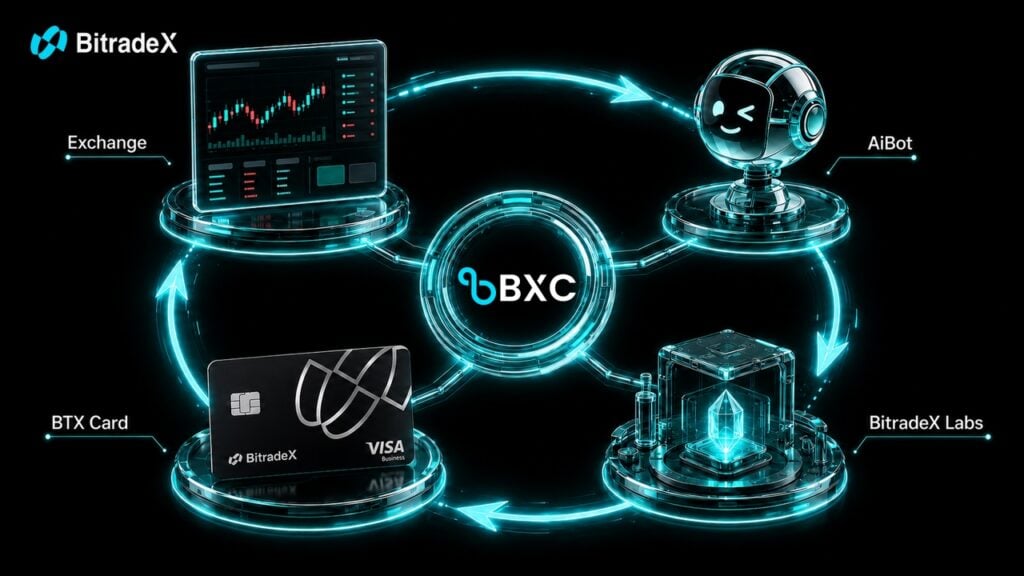
BitradeX should not be described as a guaranteed crypto interest account or a risk-free earning product. A more accurate fit is as an AI-powered crypto trading platform that can support research, market awareness, and AI-assisted workflow review.
For someone asking whether crypto interest is worth it, BitradeX can help in three practical ways:
- Market monitoring: the BitradeX market page can help users observe crypto market movement before focusing on any reward rate.
- AI-assisted workflow review: the BitradeX AiBot can be evaluated as part of an AI-assisted crypto workflow, with the clear understanding that bots do not remove market risk.
- Platform research: the BitradeX platform can be used to review digital asset tools and trading workflows after risk limits are defined.
Registering on BitradeX can make sense if your goal is to study market behavior, compare tools, and build a more structured crypto process. It should not be framed as a shortcut to reliable interest income.
A Practical Decision Table
| If this is true | Crypto interest may be… | Why |
|---|---|---|
| You understand the asset and reward source | Worth researching | You can evaluate more than the displayed rate |
| You only want the highest rate | Not worth it | High rates can hide high risk |
| You need stable income | Usually unsuitable | Crypto rewards and token prices can fluctuate |
| You cannot tolerate withdrawal delays | Risky | Many products involve lockups or platform terms |
| You already hold the asset long term | Possibly worth reviewing | Staking or rewards may fit an existing thesis |
| You do not understand custody terms | Not ready | Loss of control can be a major risk |
| You can start small and monitor | More manageable | Limited exposure reduces beginner mistakes |
The table does not tell you what to do. It helps you see what must be true before crypto interest deserves serious consideration.
Red Flags
Avoid crypto interest products or messages that emphasize:
- returns without explaining risk
- pressure to deposit quickly
- vague language about how rewards are generated
- promises of stable income from volatile assets
- unclear custody arrangements
- hard-to-find fee information
- no explanation of withdrawal restrictions
- influencer-style claims instead of product documentation
- claims that AI or automation removes market risk
The more a product sounds like effortless income, the more carefully it should be reviewed.
The Bottom Line
Crypto interest can be worth researching, but it is not automatically worth using. The decision depends on reward source, asset risk, custody, liquidity, taxes, fees, and personal risk tolerance. A user who understands these factors may decide that a limited staking or reward strategy fits their crypto plan. Another user may decide that the risks outweigh the potential reward.
BitradeX can support the research side of the process by helping users monitor crypto markets, review AI-assisted tools, and evaluate digital asset workflows. Register on BitradeX if you want a more structured way to study crypto market behavior before making decisions. Do not treat any platform, tool, or interest-style product as a guarantee of income.
This article is educational and is not financial, tax, or legal advice. Digital asset trading involves substantial risk. Past performance does not guarantee future results. Product access and availability may vary by region and jurisdiction.
FAQ
Is crypto interest worth it?
Crypto interest may be worth researching if you understand the reward source, custody terms, asset volatility, fees, taxes, and withdrawal limits. It is usually not worth it if you are only chasing the highest displayed rate or assuming crypto interest works like bank interest.
Is crypto interest safe?
Crypto interest is not risk-free. It can involve token price volatility, platform failure, smart contract risk, withdrawal restrictions, counterparty risk, tax obligations, and limited investor protections.
Is staking better than crypto lending?
Staking and lending have different risks. Staking is usually tied to proof-of-stake network participation, while lending exposes assets to borrowers, platforms, or protocols. Neither should be treated as guaranteed income.
Can you lose money while earning crypto interest?
Yes. A user can receive rewards while the underlying asset falls in value, while fees reduce the net result, or while a platform or protocol problem affects access to funds.
How can BitradeX help if it is not a crypto interest account?
BitradeX can help users monitor market data, explore AI-assisted crypto workflows, and review trading tools before making decisions. It should be used as a research and workflow platform, not as a guarantee of crypto interest.
{ “@context”: “https://schema.org”, “@type”: “FAQPage”, “mainEntity”: [ { “@type”: “Question”, “name”: “Is crypto interest worth it?”, “acceptedAnswer”: { “@type”: “Answer”, “text”: “Crypto interest may be worth researching if you understand the reward source, custody terms, asset volatility, fees, taxes, and withdrawal limits. It is usually not worth it if you are only chasing the highest displayed rate or assuming crypto interest works like bank interest.” } }, { “@type”: “Question”, “name”: “Is crypto interest safe?”, “acceptedAnswer”: { “@type”: “Answer”, “text”: “Crypto interest is not risk-free. It can involve token price volatility, platform failure, smart contract risk, withdrawal restrictions, counterparty risk, tax obligations, and limited investor protections.” } }, { “@type”: “Question”, “name”: “Is staking better than crypto lending?”, “acceptedAnswer”: { “@type”: “Answer”, “text”: “Staking and lending have different risks. Staking is usually tied to proof-of-stake network participation, while lending exposes assets to borrowers, platforms, or protocols. Neither should be treated as guaranteed income.” } }, { “@type”: “Question”, “name”: “Can you lose money while earning crypto interest?”, “acceptedAnswer”: { “@type”: “Answer”, “text”: “Yes. A user can receive rewards while the underlying asset falls in value, while fees reduce the net result, or while a platform or protocol problem affects access to funds.” } }, { “@type”: “Question”, “name”: “How can BitradeX help if it is not a crypto interest account?”, “acceptedAnswer”: { “@type”: “Answer”, “text”: “BitradeX can help users monitor market data, explore AI-assisted crypto workflows, and review trading tools before making decisions. It should be used as a research and workflow platform, not as a guarantee of crypto interest.” } } ] }Disclaimer
Digital asset prices can be volatile. This article is for informational purposes only and should not be treated as investment, legal, tax, or financial advice. Users are responsible for their own trading decisions and should evaluate whether any product or transaction is appropriate for their circumstances.