 By BitradeX
Automated crypto trading is often sold as an answer to a familiar problem: crypto markets never close, but human attention runs out. Beginners check charts before sleep, wake up to price alerts, and second-guess decisions because a candle moved while they were away.
Automation can help with that problem, but only in a narrow way. It can watch conditions, send alerts, prepare orders, execute prewritten rules, and keep records more consistently than a tired person staring at a phone. It cannot decide whether a trade belongs in your plan, whether a market has changed enough to pause, or whether you are taking more exposure than you meant to take.
The useful question is not “Can a bot trade for me?” It is “Which part of my attention am I allowed to hand off?”
For beginners, automated crypto trading should start with an attention rule: a written boundary that says what the system may monitor, what it may do, what it must never change by itself, and when the human must return. Without that rule, automation may only replace constant chart-watching with constant bot-watching.
Why Chart-Watching Survives Automation
Crypto creates attention pressure because it trades continuously. A stock trader can at least use market hours as a rough boundary. A crypto trader sees movement at night, on weekends, and during unrelated daily routines. That makes it easy to confuse attention with control.
Watching a chart can feel useful because something is always changing. Price moves, spreads widen, volume shifts, and social feeds react. The problem is that most of those observations do not create a decision. A beginner may look twenty times and act zero times, or worse, act because they looked too many times.
Automated crypto trading does not solve this by itself. A bot can scan faster than you. An alert can arrive instantly. A dashboard can show more data than one person can track. But if every alert pulls you back into the same anxious decision cycle, the tool has not reduced the burden. It has made the burden more organized.
The first job is to separate useful attention from noise.
Useful attention asks:
- Has a prewritten condition happened?
- Does this condition require action, review, or no response?
- Is the planned position size still within my limit?
- Has anything changed that should pause the strategy?
Noise asks:
- Did price move since the last time I checked?
- Is another trader excited?
- Did I miss a perfect entry?
- Should I change the plan because I feel uncomfortable?
Automation can handle the first group better than the second. The second group is a behavior problem, not a software problem.
The Attention Handoff Rule
An attention handoff rule is a simple agreement with yourself before automation begins.
It has four parts:
| Handoff Part | Question To Answer | Example Boundary |
|---|---|---|
| Trigger | What should the system watch? | Price enters a planned zone, volatility rises, or an order condition is met |
| Permission | What may happen automatically? | Send an alert, place a limited order, or record a signal |
| Human checkpoint | What requires manual review? | New asset, larger size, leverage, strategy change, or repeated failed signal |
| Stop condition | When does automation pause? | Unusual volatility, broken data feed, emotional override, or daily loss limit reached |
The rule matters because most automation mistakes are not caused by one button. They happen when a small rule slowly expands into a bigger decision. A trader starts with alerts, then lets the system place orders, then increases position size, then keeps the same settings in a market where they no longer fit.
Automation works better when the system’s permission is smaller than the trader’s fear of missing out.
For a beginner, that means the first version may be boring:
- Alerts before live execution.
- Small scope before full automation.
- One asset or market pair before many.
- Written pause conditions before performance review.
- Manual review before any change to size, leverage, or strategy.
This is not slower for the sake of being cautious. It keeps the trader from handing off judgment before they have defined the judgment.
What Automation Can Actually Handle
Automated crypto trading is strongest when the task is specific, repeatable, and rule-based.
It can monitor market conditions. A system can watch price ranges, volatility thresholds, volume changes, moving-average conditions, or order-book movement without needing sleep. This can reduce the need to refresh charts just to know whether a planned condition has occurred.
It can reduce execution delay. If your rule is already written, an automated workflow can place or prepare an order faster than a person who needs to open an app, find the pair, calculate size, and decide whether the rule still applies.
It can enforce basic limits. A properly configured workflow can reject orders above a defined size, stop adding exposure after a set number of entries, or prevent multiple entries from firing too close together. These are not advanced features by themselves; they are guardrails around repetitive behavior.
It can keep a better log. Manual traders often remember the dramatic trades and forget the ordinary ones. Automation can record signals, entries, exits, skipped conditions, and timestamps. That record helps a beginner review whether the process is coherent rather than relying on mood.
It can make waiting easier. If a system is watching only the conditions you wrote down, you do not need to keep checking whether nothing has happened. That is one of the most practical benefits of automation: it can make inaction visible.
Here is the clean boundary:
| Task | Good Automation Fit? | Why |
|---|---|---|
| Watching a defined price zone | Yes | The condition is objective |
| Sending an alert | Yes | The system informs, but does not decide |
| Preparing a limited order from a saved rule | Often | The rule exists before the market moves |
| Increasing position size after a streak | No | That changes risk exposure |
| Choosing a new coin because it is trending | No | That requires research and judgment |
| Ignoring a pause condition | No | That breaks the handoff rule |
| Reviewing results weekly | Partly | The system can summarize, but the human interprets |
The more a task requires judgment, context, or self-control, the less suitable it is for full handoff.
What Should Stay With The Trader
Some decisions should remain human-owned even when a platform provides automation.
Asset selection is one. A bot can follow rules on a selected market, but it should not be treated as a substitute for understanding what the asset is, how liquid it is, how volatile it can be, and whether the pair fits your experience level.
Risk budget is another. Automation should not decide how much of your capital belongs in an active strategy. A beginner should decide the maximum amount before setup, then keep that number outside the bot’s day-to-day logic. If the system can talk you into adding more capital during a drawdown or a strong move, the boundary is weak.
Strategy changes should also stay manual. A rule that worked in a sideways market may behave differently during a sharp trend or a fast selloff. Switching parameters because recent results feel frustrating is not the same as improving a strategy.
Leverage needs extra caution. Futures and margin tools can magnify both gains and losses, and automation can act quickly when conditions move quickly. Beginners should avoid treating leveraged automation as a time-saving upgrade. It is a different risk category.
Security choices should remain deliberate too. API permissions, withdrawal access, account security settings, and device hygiene are not small details. If an automated tool connects to an account, the permission model matters. A trading-only permission is very different from a permission that can move funds.
This is why unattended automation is a poor fit for crypto trading. A better phrase is “set, limit, monitor, and review.”
A Beginner Setup That Limits The Blast Radius
A beginner who wants less chart-watching can build automation in stages.
Start with a no-trade watchlist. Choose a small number of markets and define the conditions worth knowing about. For example: a planned price zone, a volatility threshold, or a volume change. The goal is to train attention before automating action.
Next, use alerts that require a written response. When an alert fires, do not immediately trade. Write one sentence: “This alert matters because…” If the sentence is vague, the alert is too vague.
Then create a paper or observation period. Track what would have happened if a rule had executed, but do not treat the result as proof that the rule is ready. A short favorable run can be random, and a bad run can expose useful flaws.
After that, define execution limits before any live order:
- Maximum position size per trade.
- Maximum number of open positions.
- Maximum number of entries per day.
- Conditions that pause the strategy.
- Manual review required before changing the rule.
Only then should live automation be considered, and even then the first version should be narrow. One market, one rule type, one review schedule. Complexity can wait until the trader has evidence that the small version is understandable.
The purpose is not to eliminate uncertainty. The purpose is to keep a mistake from scaling faster than the beginner can understand it.
How AI-Assisted Workflows Fit Without Taking Over
AI can make automated crypto trading more useful when it helps organize signals, compare market conditions, and structure review. It becomes risky when it is treated as an authority that can replace a trader’s own limits.
For example, an AI-assisted workflow may help surface market movement, organize possible scenarios, or keep a user focused on predefined rules. That can be useful for someone who wants fewer random chart checks. But the user still needs to define what the system is allowed to do, which signals matter, and when a signal should be ignored.
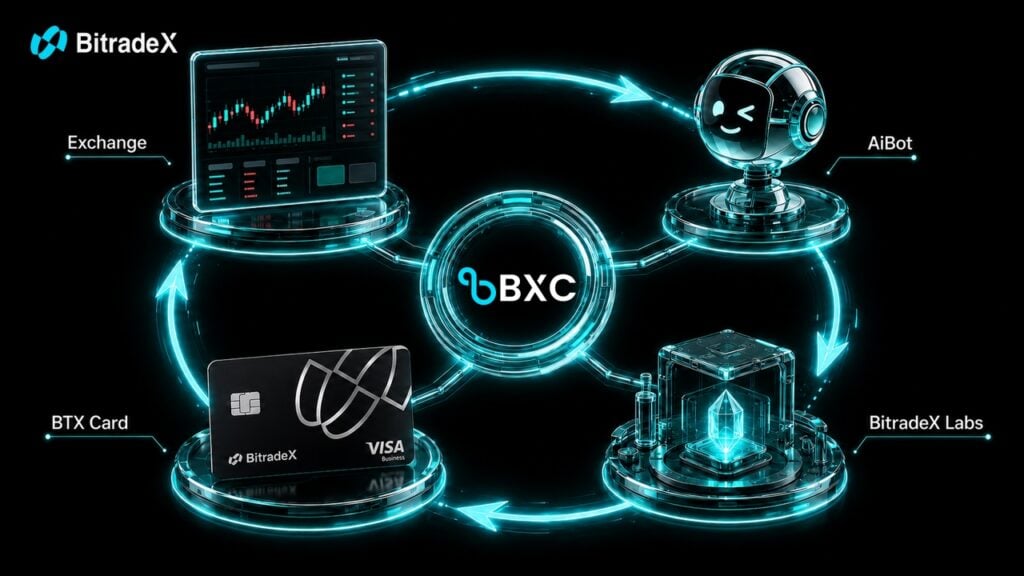
BitradeX positions AiBot around AI-assisted and automated trading workflows. In this article’s framework, the relevant next step is not “let AI decide everything.” It is to inspect whether AiBot can support the attention rule you have already written: alerts, parameters, limits, and review.
That is the restrained way to use an AI bot. The tool may help with monitoring and structure. The trader still owns the market selection, capital limit, pause rule, and final responsibility.
When To Pause The System
Automation should include pause rules before it includes confidence.
Pause when data looks wrong. If prices, spreads, or order status do not match what you see elsewhere, stop the workflow until the issue is understood.
Pause after rule drift. If you keep changing the plan after alerts arrive, the automation is not the problem. The rule is not settled enough to automate.
Pause after emotional overrides. If a trader cancels, doubles, re-enters, or changes size because of fear or excitement, the next step is review, not more automation.
Pause when market conditions change. A rule designed for a quiet range may behave poorly during a high-volatility breakout. A rule designed for a trend may fail in chop. Market context matters even when the execution is automated.
Pause when the system becomes harder to explain. If you cannot describe why a trade happened in one or two sentences, the workflow is too complex for your current process.
Regulators have also warned investors to be careful with auto-trading systems, especially when unregistered promoters claim that automation or artificial intelligence can produce reliable trading outcomes. FINRA’s July 2025 investor alert on auto-trading and unregistered entities is useful here because it reinforces the same boundary: automation should not be confused with verified advice or assured results.
The Practical Goal Is Less Random Attention
Automated crypto trading is not a cure for volatility, bad rules, or impatience. Its practical value is narrower and more useful: it can reduce random attention when the trader has already defined what deserves attention.
If you are new to crypto automation, do not begin by asking how many trades a bot can make. Begin with four written lines:
- What should be watched?
- What may happen automatically?
- What requires me to return?
- What stops the workflow?
Those lines turn automation from a vague hope into a bounded system. They also make BitradeX-style AI-assisted tools easier to evaluate because you are no longer asking whether a tool sounds impressive. You are asking whether it respects your limits.
That is the real shift: not from manual trading to automatic trading, but from constant watching to planned attention.
FAQ
What is automated crypto trading?
Automated crypto trading uses software to monitor market conditions and carry out predefined actions such as alerts, order preparation, or order execution. The important word is “predefined.” The stronger the rule is before the market moves, the less room there is for emotional changes after an alert fires.
Can automated crypto trading stop me from watching charts all day?
It can reduce unnecessary chart-checking if you define what the system should watch and when you need to return. It will not help much if every alert makes you reopen the chart and rethink the entire plan. Automation works better as an attention filter than as a substitute for judgment.
What should beginners automate first?
Beginners should usually start with alerts, watchlists, and trade journals before live execution. These tasks help separate useful signals from noise without giving the system permission to act with capital. Live execution should come only after limits, pause rules, and review routines are written down.
Are crypto trading bots enough on their own?
No. Bots can follow rules, but they do not make a strategy suitable, choose an appropriate risk budget, or know when your personal circumstances have changed. A bot should be treated as a workflow tool, not as a financial adviser.
How can AI-assisted tools fit into automated crypto trading?
AI-assisted tools can help organize market signals, structure workflows, and reduce manual monitoring. They should still operate inside user-defined rules, including position limits, permitted actions, pause conditions, and review schedules. The user remains responsible for whether the workflow fits their goals and risk tolerance.
Disclaimer
Digital asset prices can be volatile. This article is for informational purposes only and should not be treated as investment, legal, tax, or financial advice. Users are responsible for their own trading decisions and should evaluate whether any product or transaction is appropriate for their circumstances.