 By BitradeX
Millennials have a different wealth-building problem than a generic investing article usually assumes. Many are old enough to care about retirement, housing, career mobility, and family planning, but young enough to still have several decades of compounding ahead. Crypto can fit into that picture, but only if it is treated as a defined risk sleeve rather than the center of the plan.
That is the useful frame for wealth building strategies for millennials cryptocurrency investment: crypto should earn a job inside a broader system before it receives a dollar. If the plan starts with a coin, a chart, or an influencer thread, the allocation is already being pulled by attention. If it starts with goals, cash needs, risk limits, diversification, and review rules, crypto becomes easier to evaluate without turning every market move into a life decision.
Start With the Wealth System, Not the Token
The first decision is not whether Bitcoin, Ethereum, stablecoins, or smaller crypto assets look attractive this month. It is whether the rest of the financial system can absorb a volatile sleeve.
The SEC’s Investor.gov guide to asset allocation, diversification, and rebalancing explains asset allocation as the process of dividing a portfolio among categories such as stocks, bonds, and cash, with the right mix depending heavily on time horizon and risk tolerance. It also notes that diversification should happen at two levels: across asset categories and within each category. That matters for crypto because a wallet with five tokens may still be a concentrated bet if all five assets respond to the same liquidity cycle, exchange risk, or sentiment shock.
For a millennial beginner, the wealth system usually has to answer five questions before crypto allocation:
- How much cash is needed for near-term obligations?
- Which goals have fixed dates, such as housing, education, or a career move?
- How much of the portfolio is already tied to volatile assets?
- What loss would force a bad decision, such as selling at the wrong time?
- How often will the portfolio be reviewed?
Those questions sound less exciting than coin selection, but they prevent crypto from becoming an emotional budget category. The goal is not to make crypto feel small. The goal is to make its role legible.
Give Crypto a Job Before It Gets a Budget
Crypto can serve different jobs for different investors. It may be a small speculative sleeve, a long-term digital asset exposure, a learning allocation, or a market-structure bet. Those are not the same thing.
A learning allocation is money set aside to understand wallets, exchanges, market orders, volatility, custody, and security habits. A long-term digital asset sleeve is a defined allocation that is reviewed against the rest of the portfolio. A trading allocation is capital that can be lost without damaging core goals. Mixing those jobs creates most beginner mistakes.
The JPMorgan Chase Institute’s December 2022 research on U.S. household crypto use found that almost 15 percent of individuals in its sample had conducted transfers into crypto accounts by mid-2022. The same study found that crypto holdings were small for most users, with median flows below one week’s take-home pay, while almost 15 percent of users had net transfers above one month’s pay. That difference is the heart of the risk-budget problem: participation and overexposure are not the same behavior.
For millennials, a cleaner rule is to define the crypto sleeve in advance:
| Crypto role | What it can do | What should limit it |
|---|---|---|
| Learning sleeve | Build operational understanding | Small size, no leverage, written lessons |
| Long-term exposure | Add digital asset participation | Allocation cap and rebalancing rule |
| Trading sleeve | Test active decisions | Loss limit, position size, review journal |
| Automation sleeve | Reduce manual monitoring | Human rules, alerts, and shutdown criteria |
This turns cryptocurrency investment strategies into a portfolio design question, not a market-timing exercise.
Diversify Twice or Do Not Call It Diversification
Crypto investors often use diversification too narrowly. Owning several coins is not the same as diversifying a wealth plan.
First, diversify outside crypto. Stocks, bonds, cash, retirement accounts, emergency funds, career income, and tax planning may all matter more than adding another token. Investor.gov’s rebalancing guidance is useful here: when one part of a portfolio grows faster than the rest, the portfolio can drift away from its original risk level. The guide describes calendar-based reviews, such as every six or twelve months, and threshold-based reviews when an asset class moves away from a preset target.
Second, diversify inside crypto only after the outside allocation makes sense. A beginner may decide that most crypto exposure should stay in more established assets, while any smaller-token research belongs in a tighter experimental sleeve. Another investor may decide that direct crypto is unnecessary and that public-market crypto exposure fits better elsewhere. The point is not a universal allocation. The point is that every crypto dollar should answer a portfolio job.
The mistake is letting winners rewrite the plan. If crypto rises sharply, the sleeve can become too large without any new decision. If crypto falls, the investor may keep adding money to defend a prior belief. A written rebalancing rule helps both situations: it gives the investor permission to trim strength and permission to stop adding when the original reason no longer holds.
Choose Strategies by Behavior, Not Hype
Most beginner strategy lists are organized by product type: buy and hold, dollar-cost averaging, staking, trading, bots, DeFi, stablecoins, and so on. That structure is easy to scan, but it hides the more important question: what behavior does the strategy demand from the investor?
Dollar-cost averaging can reduce timing pressure, but it still requires a clear asset choice and a rule for when the allocation becomes too large. Holding can support long time horizons, but it can also become an excuse to ignore broken assumptions. Trading can teach market structure quickly, but it increases the burden of execution discipline. Automation can reduce screen time, but it can also scale a weak rule faster than manual trading would.
FINRA’s crypto risk page warns that crypto assets are often extremely volatile, can be less liquid than traditional financial instruments, and may lack protections that investors associate with registered products or intermediaries. Those are not abstract risks. They affect the practical design of a millennial crypto strategy:
- Position size matters because price swings can be dramatic.
- Liquidity matters because selling may be harder during stress.
- Custody and platform risk matter because market price is not the only way to lose access.
- Review cadence matters because a small experiment can drift into a core position.
A useful millennial strategy therefore starts with behavior constraints:
| If the investor tends to… | Strategy guardrail |
|---|---|
| Chase recent winners | Use a waiting period before new purchases |
| Over-check prices | Set fixed review windows |
| Average down emotionally | Require a written thesis update before adding |
| Trust tools too quickly | Test with small size and manual review |
| Avoid selling winners | Use a drift threshold before trimming |
The strategy is not “buy this asset.” The strategy is “control the behavior that usually damages the plan.”
Automation Should Reduce Work, Not Accountability
Automation belongs late in the process. A crypto bot, signal dashboard, alert tool, or AI-assisted workflow should not decide the wealth strategy. It should operate inside rules that already exist.
For beginners, the practical test is simple: if automation makes it easier to break the risk budget, it is not helping. If it helps monitor markets, structure alerts, compare signals, or document decisions while the human keeps control of allocation and exposure, it may be useful.
A Millennial Crypto Plan Needs a Review Ritual
The review ritual is where the plan becomes real. Without it, a crypto allocation becomes a collection of reactions.
A quarterly or semiannual review can be enough for a long-term sleeve. A trading sleeve may need a shorter review cycle, but that review should focus on process rather than excitement. The questions should be boring by design:
- Is the crypto sleeve still within its target range?
- Did any purchase violate the written rule?
- Has any asset become too large relative to the rest of the sleeve?
- Did automation create trades, alerts, or suggestions that were not understood?
- Has a life goal changed enough to lower risk capacity?
- Are taxes, fees, custody, or account access issues being tracked?
The review should also separate market movement from decision quality. A profitable trade can still be a bad process if it ignored the risk budget. A losing position can still be a useful lesson if it was sized correctly and documented honestly. Millennials have time, but time does not repair undisciplined concentration.
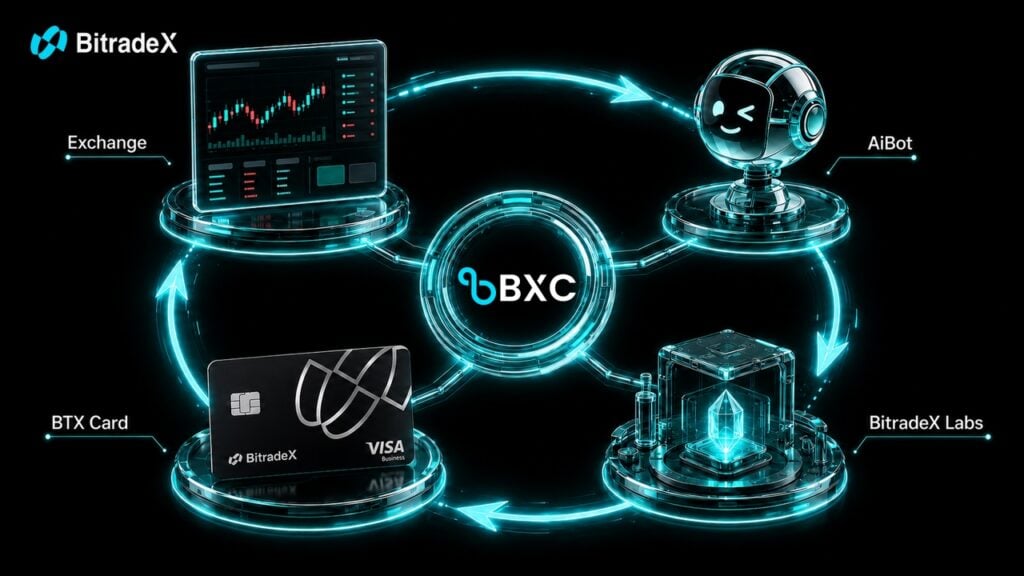
BitradeX fits this article only in that narrow workflow sense. Its AiBot page is relevant for readers who want to review an AI-assisted crypto workflow after they have already defined a crypto sleeve, position-size rules, and review criteria. That is different from asking a tool to decide whether crypto belongs in a millennial wealth plan. AI-assisted tools do not remove market risk, and they should not be treated as a substitute for a written allocation policy.
The Better Question Is Whether Crypto Makes the Plan More Durable
Crypto wealth content often sells the feeling of being early. A stronger millennial strategy asks whether crypto makes the whole plan more durable.
Durability means the investor can keep saving during weak markets, avoid oversized positions during strong markets, understand what each asset is supposed to do, and use tools without outsourcing judgment. It also means accepting that a crypto sleeve can be useful even when it is small. The size of the allocation should be tied to the investor’s goals, income stability, liquidity needs, and tolerance for loss, not to the loudest market narrative.
For millennials, cryptocurrency investment strategies work better when crypto is treated as a controlled satellite around a broader wealth plan. Define the job, cap the sleeve, diversify beyond crypto, document the behavior rules, and only then consider AI-assisted tools for monitoring and workflow support. That sequence is slower than chasing a market story, but it is much easier to live with when volatility arrives.
FAQ
What are cryptocurrency investment strategies for millennials?
Cryptocurrency investment strategies for millennials can include a capped long-term crypto sleeve, dollar-cost averaging, smaller learning allocations, trading journals, and AI-assisted monitoring. The important step is to connect each strategy to a broader wealth plan, risk budget, and review rule.
How should millennials think about crypto allocation?
There is no single allocation that fits every investor. A millennial crypto allocation should depend on cash needs, time horizon, income stability, existing portfolio risk, and the amount of loss the investor can tolerate without damaging core goals.
Is crypto enough for long-term wealth building?
Crypto alone is usually too concentrated and volatile to serve as a complete wealth-building plan. A more durable approach treats crypto as one possible sleeve alongside savings, diversified investments, career income, retirement planning, and liquidity management.
Can AI tools help with cryptocurrency investment strategies?
AI-assisted tools can help organize market monitoring, signal review, alerts, and workflow discipline. They should not decide the investor’s allocation, remove review responsibility, or be used to justify larger risk exposure than the written plan allows.
How can beginners avoid overexposure to crypto?
Beginners can set a maximum crypto sleeve, avoid using money needed for near-term obligations, review allocation drift on a fixed schedule, and document why each asset belongs in the portfolio before adding more.
Disclaimer
Digital asset prices can be volatile. This article is for informational purposes only and should not be treated as investment, legal, tax, or financial advice. Users are responsible for their own trading decisions and should evaluate whether any product or transaction is appropriate for their circumstances.